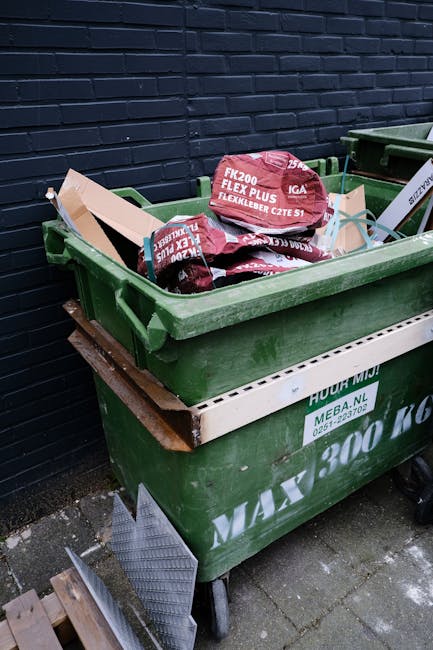
What to know about builders rubbish on Roman Road estate

Builders rubbish on Roman Road estate can turn a tidy project into a messy one faster than you'd think. One minute you're stripping out an old kitchen or replacing a bathroom suite, and the next you've got broken plasterboard, timber offcuts, rubble, packaging, and the odd awkward item sat in a hallway or by the kerb. If you're planning work on or around Roman Road estate, it helps to know what counts as builders waste, how to handle it properly, and which disposal method suits the job best.
This guide walks through the practical side of builder's waste removal in plain English: what the rubbish usually includes, why it matters, how collection and disposal tend to work, and how to avoid the usual headaches. You'll also find a comparison table, a simple checklist, and a few real-world pointers that make the whole thing less stressful. Let's face it, nobody wants a renovation dragged out by a mountain of bags and dust.
Why What to know about builders rubbish on Roman Road estate Matters
Builders rubbish is not just "rubbish". It usually includes heavier, sharper, dustier waste streams that need careful handling: bricks, tiles, broken concrete, soil, timber, old fixtures, packaging from new materials, and sometimes mixed loads from a full refurbishment. On a busy estate, that matters because shared access, footpaths, parking, and neighbour relations can all be affected pretty quickly.
A poorly managed pile of waste can make a job look unfinished, slow down trades, and create avoidable safety risks. If a corridor, entrance, or parking bay is blocked, it can become more than an inconvenience; it can upset residents and create a trip hazard. On a practical level, organised builder's waste removal helps keep the site safer, keeps work moving, and makes the whole project feel under control instead of chaotic.
There's also the question of disposal quality. Different materials should be separated where possible, and some items need special handling. Mixing the wrong things together can make recycling harder and can sometimes increase cost. That's why a little planning at the start usually saves more time than you'd expect later on.
If your project involves a lot of renovation or strip-out material, it's worth looking at builders waste removal alongside related options such as construction waste disposal and site clearance. Those services can be useful whether you're dealing with a small flat refurb or a larger estate-based job.
How What to know about builders rubbish on Roman Road estate Works
In simple terms, builder's waste is collected, loaded, transported, and sorted for reuse, recycling, or disposal. The exact setup depends on the access, the amount of waste, and how quickly you need it gone. On an estate, that access part really matters. Lifts, stairwells, parking restrictions, and loading points can all influence the best method.
Most jobs fall into one of a few common patterns:
- Skip hire for larger or ongoing renovations where you can fill a container over time.
- Wait-and-load for places where a skip would be awkward or not allowed to stay put.
- Grab hire for bulky, heavy loads that can be picked up quickly from accessible ground.
- Man and van for smaller mixed loads or awkward clearances that need hands-on loading.
The right choice usually comes down to space, timing, and what kind of waste you have. A bathroom refit with plasterboard, broken ceramics, and packaging might be handled very differently from a kitchen strip-out with bulky cabinets and worktops. And if you're dealing with a tight window, say a morning slot before residents start using the car park heavily, same-day support can be a lifesaver.
Some projects need a permit if a skip sits on the public highway. If you're not sure whether your estate layout counts as private land or road-adjacent space, check before booking. It sounds dull, I know, but one wrong assumption can become a very visible problem. You can read more about skip hire and skip hire permits if you're comparing options.
Key Benefits and Practical Advantages
Handled well, builder's waste removal is one of those behind-the-scenes jobs that makes everything else feel easier. The benefits are practical rather than flashy, but they matter a lot.
- Cleaner working space: Trades can move more safely and efficiently when waste is not piled up underfoot.
- Better neighbour relations: Less mess outside means less friction on an estate where people live close together.
- Faster project flow: When waste is removed regularly, the job keeps moving instead of stalling.
- Improved recycling potential: Sorted loads are easier to process responsibly.
- Reduced manual handling: A suitable collection method can cut down on repeated lifting and carrying.
There's also a peace-of-mind angle. A tidy, planned waste solution helps you feel like the project is under control. That sounds simple, but in the middle of dust, noise, and people coming and going, it makes a real difference. Truth be told, a lot of stress on refurbishment jobs comes from the mess, not the work itself.
For homeowners and landlords, the advantage is even more obvious if the work includes mixed waste. Services such as rubbish removal and waste recycling services can be a straightforward way to keep the clear-up efficient while still handling the load responsibly.
Who This Is For and When It Makes Sense
This topic matters to anyone doing construction, refurbishment, or heavy DIY work on Roman Road estate. That might be a homeowner, a landlord, a letting agent, a builder, or a small contractor juggling more than one job. It's especially useful if access is limited or if the property is part of a shared block where keeping common areas clear is non-negotiable.
It makes sense when you have:
- a kitchen or bathroom rip-out
- plasterboard, brick, or rubble to remove
- bulky carpentry waste, such as doors or worktops
- packaging from fitted units or appliances
- mixed renovation waste that cannot be left in normal household bins
It also makes sense if you're on a deadline. Maybe the decorator is coming in next, or the flooring fitters are booked for Monday morning. In those situations, a same-day or rapid collection can keep the whole schedule on track. Services like same-day skip hire, wait and load skip hire, and grab lorry hire are worth considering when timing and access are both tight.
If you are managing a larger commercial job or repeated waste movements, then commercial skip hire can be a more structured fit. For demolition-heavy work, the waste profile changes again, and demolition waste removal may be more suitable.
Step-by-Step Guidance
If you want the process to run smoothly, it helps to treat waste as part of the project plan, not an afterthought. Here's a practical approach.
- Estimate the waste first. Look at the kind of work being done and the likely materials. A small strip-out can still produce more waste than expected, especially when walls, tiles, and old fittings come out together.
- Check the access on site. Measure doorways, stairwells, parking spaces, and loading points. On an estate, a perfectly good solution on paper can become impossible if access is narrow or blocked.
- Separate waste where you can. Timber, inert rubble, cardboard, metal, and general mixed waste are easier to manage when they are not all thrown into one heap.
- Choose the right collection method. If you need a container over several days, builders skip hire may be the natural fit. If space is limited, a man and van or wait-and-load setup may work better.
- Think about permits early. If the skip is likely to go on a public road or a restricted shared area, check whether a permit is needed.
- Load safely and sensibly. Heavy items should go in first, sharp items should be wrapped where appropriate, and the load should not be stacked so high that it becomes unstable.
- Book disposal before the mess builds up. Do not wait until the hallway is full and you're stepping over bags. That is usually when the stress kicks in.
A small planning note: if you are expecting awkward items, such as a fridge, sofa, or mixed household leftovers from a refurb, it can help to line up separate disposal options in advance. See fridge and appliance removal or mattress and sofa disposal if those items are part of the job.
Expert Tips for Better Results
From experience, the best builder's waste jobs are the ones that feel almost boring. That is a compliment, by the way. No drama, no last-minute "where are we putting this pile?", no surprise blocked access at 4 p.m.
- Keep waste moving daily on longer jobs. A small clear-out each day is easier than one giant pile at the end.
- Use labels or simple zones. Even a chalk mark or taped-off corner helps trades know where rubble, timber, and packaging should go.
- Protect shared spaces. On an estate, layboards or careful loading can prevent scuffed walls and dirty stairwells.
- Ask about enclosed options for dusty loads. If the project creates loose debris, enclosed and lockable skip hire can add a bit more control.
- Match the vehicle to the site. A grab lorry can be excellent for heavy, loose material if access allows, while a van-based collection may suit mixed clearances better.
One thing people often overlook is the finish of the job. The last 10% of waste removal can make a space look 90% better. That final sweep, the missing plaster dust, the clear landing-suddenly the property starts to feel like a home again. Small thing, big feeling.
If you are still deciding on collection style, the service pages for construction waste clearance and man and van are useful reference points for matching the method to the job.
Common Mistakes to Avoid
The most common mistakes are usually simple ones. Not because people are careless, just because renovation jobs move quickly and waste becomes "someone else's problem" until it suddenly isn't.
- Underestimating volume: A heap that looks small on day one can become a serious obstruction by day three.
- Mixing prohibited items: Some materials should not be placed in standard builder's waste loads, especially anything hazardous.
- Ignoring access rules: Shared entrances, parking bays, and estate walkways need more care than a private driveway.
- Leaving it too late: If the waste strategy is arranged after the work starts, the project can feel disorganised from the outset.
- Assuming every service works the same way: A skip, a grab lorry, and a wait-and-load collection each suit different situations.
Another mistake is forgetting about permit pressure. If a skip ends up where the estate team, landlord, or local rules say it should not, you may have to move it quickly. That is rarely cheap in time or energy. Better to ask early and keep life easy.
And one more, because it comes up a lot: do not overload containers. It may seem efficient to cram in "just one more bag", but overfilled waste is harder and less safe to move. Not worth the gamble.
Tools, Resources and Recommendations
You do not need a lot of fancy equipment to manage builders rubbish properly, but a few sensible tools help a great deal.
- Heavy-duty rubble sacks: Better than thin bags that split halfway down the stairs.
- Wheelbarrows or trolleys: Useful for moving waste to a collection point without overloading one person.
- Dust sheets and boards: Helpful for protecting common areas and lifts.
- Gloves and sturdy footwear: Basic, but easy to forget when the job is busy.
- Measuring tape: Sounds unglamorous, yet essential for access checks and space planning.
For planning and comparison, these pages are worth a look: skip sizes and prices to understand capacity choices, what can go in a skip for acceptable materials, and pricing and quotes if you want a clearer sense of cost structure before booking.
If your project is linked to a wider property clear-out rather than just renovation waste, services such as house clearance, garage and loft clearance, or office clearance may also be relevant. It depends on the mix of items, really.
Law, Compliance, Standards, or Best Practice
Builders rubbish is not something to treat casually. In the UK, waste producers have responsibilities around proper disposal, safe handling, and using authorised routes for waste transfer. The exact obligations can vary depending on the job, the materials involved, and who is producing the waste, so it is wise to work with a provider that takes compliance seriously.
There are a few broad best-practice principles to keep in mind:
- Do not mix hazardous items with normal builders waste.
- Keep loads safe and stable for collection and transport.
- Use a suitable service for the waste type, rather than forcing everything into one solution.
- Check access and permit requirements before placing containers or arranging collections.
- Choose responsible disposal routes that prioritise recycling where practical.
If your job includes items such as paint, solvents, chemicals, or other risky materials, you should not assume they can go in a standard builder's load. In those cases, hazardous waste disposal is the safer and more appropriate route.
Good providers also care about insurance, safety, and clear terms. Those pages may not be the most exciting reading on earth, but they matter. A lot. You can review health and safety policy, insurance and safety, and terms and conditions if you want to understand the service framework before you book.
Options, Methods, or Comparison Table
There is no one-size-fits-all answer here. A quick comparison usually makes the choice clearer.
| Method | Best for | Main advantage | Possible limitation |
|---|---|---|---|
| Skip hire | Ongoing refurbishments and steady waste buildup | Convenient if you need a container on site | May need a permit or enough space for placement |
| Wait and load | Tight access, no room for a static skip | Quick turnaround with no long on-site container | Requires waste to be ready at collection time |
| Grab lorry hire | Bulky, heavy, or loose material at ground level | Efficient for larger loads and hard material | Needs practical vehicle access |
| Man and van | Smaller loads or awkward mixed clearances | Flexible and hands-on | Less suited to very large volumes |
If you want a more visible, controlled solution, a builders' skip can be the simplest route. If space is limited or the estate layout makes a static container awkward, then a wait-and-load or van-based collection often makes more sense. That is why the access check matters so much. It decides half the battle before the waste even moves.
For anyone comparing those options in more detail, wait and load skip hire and grab hire services are useful places to start.
Case Study or Real-World Example
Imagine a two-bedroom flat renovation on Roman Road estate. The job includes removing old units, replacing tiles, lifting floor coverings, and stripping out a tired bathroom. By day two, there is a mix of plasterboard offcuts, broken ceramics, timber, packaging, and a few heavy bags of rubble. Nothing dramatic on its own, but together it starts to crowd the hallway and make the flat feel like a building site.
In a case like that, the team usually has to decide quickly: keep loading a skip over several days, or arrange a fast collection so the space can be handed back to the fitters. If access is straightforward and there is space for a container, skip hire can work nicely. If the estate layout is tight and the residents' access needs to stay clear, a wait-and-load or man and van collection may be the cleaner choice.
What tends to make the biggest difference is not the size of the job, but the timing. Once the waste has built up enough to block movement or make the flat unpleasant to work in, everyone notices. The dust smell, the scrape of bags across the floor, the sigh from whoever has to move one more broken tile bag downstairs... yes, we have all seen that moment.
For a project like this, planning the waste route alongside the refurbishment itself usually produces the best result. A good fit would often involve construction waste clearance or, for a more flexible household-style clear-out, domestic skip hire.
Practical Checklist
Use this as a quick pre-booking check before the waste starts piling up.
- Have I identified the main waste types?
- Do I know whether the load includes anything hazardous or restricted?
- Is there enough space for a skip, vehicle, or loading area?
- Do I need a permit or permission for the intended placement?
- Have I estimated the volume properly, with some margin?
- Will the waste need to be removed in one visit or over several days?
- Have I protected shared areas, entrances, and floors?
- Do I know which collection method fits the site best?
- Have I checked booking times against the project schedule?
- Do I have a plan for final tidy-up after collection?
If you can tick most of those off, you are in a much better position. Not perfect, maybe. But far better, and that usually is enough.
Conclusion
Builders rubbish on Roman Road estate is easiest to manage when you treat it as part of the job rather than an inconvenient extra. The best approach depends on access, waste volume, timing, and whether the load includes awkward or hazardous items. Once those are clear, choosing between skip hire, wait-and-load, grab hire, or man and van becomes much simpler.
Done well, waste removal keeps the site safer, protects shared spaces, and helps the project move with less friction. It also gives you that satisfying feeling when the last bag is gone and the place finally breathes again. A small victory, but a real one.
Get a free quote today and see how much you can save.
If you want a reliable next step, start by comparing the waste type, the site access, and the speed you need. From there, the right solution usually becomes obvious enough. And if not, that's fine too - a quick, sensible plan beats a rushed one every time.
Frequently Asked Questions
What counts as builders rubbish on Roman Road estate?
It usually includes renovation and construction waste such as rubble, bricks, tiles, timber, plasterboard, packaging, old fittings, and mixed strip-out material. If it came out of a building job, it probably belongs in this category.
Do I need a skip permit for builders waste?
Possibly. If the skip needs to sit on a public road or another regulated space, a permit may be required. If it is fully on private land, it may not be. Always check access and placement before booking.
Is wait and load better than skip hire on an estate?
It can be, especially where space is tight or a static skip would get in the way of residents. Wait and load is often ideal for shared environments, but it depends on how quickly your waste can be gathered and loaded.
Can I put rubble and timber together in one load?
Usually yes, though separating material types can sometimes help with recycling and overall waste handling. If the load is very mixed, ask what the best approach is before you start tossing everything in together.
What should never go in builders waste?
Hazardous items should not go into a standard builders waste load. That includes materials such as solvents, certain chemicals, and anything likely to need special disposal. When in doubt, check before mixing it in.
How do I know which waste removal method to choose?
Start with access, waste volume, and timing. A skip suits ongoing work, a grab lorry suits heavy loose material, wait and load suits tight access, and a man and van can work well for smaller mixed clearances.
What if the project creates more waste than expected?
That happens a lot, honestly. If the waste grows mid-job, you may need an extra collection or a bigger capacity option. Planning a little extra headroom is usually wise.
Can builders rubbish be recycled?
Many materials can be recycled or sorted for recovery, depending on what is in the load and how cleanly it has been separated. That is one reason proper waste segregation is worth the effort.
Is same-day collection available?
Sometimes, yes. It depends on availability, access, and the type of waste. Same-day support can be especially useful when a project is running behind or a shared area needs clearing quickly.
What is the safest way to deal with sharp or dusty waste?
Use sturdy sacks, wrap sharp items where sensible, wear gloves and proper footwear, and keep the load stable. Dusty material may also be better handled in enclosed or lockable containment if the site is exposed.
How much builders rubbish can a skip take?
That depends on the skip size and the type of material. Heavy waste like rubble fills capacity differently from lighter mixed rubbish, so volume and weight both matter. It is worth checking size guidance before booking.
Where can I find more details before I book?
Useful starting points include skip sizes and prices, what can go in a skip, and book online. Those pages help you match the service to the job without guesswork.